What size potting shed do I need?
Written by Matt W on 27th Jun 2026.
Potting shed size comes down to how you garden, not the size of your plot. Choose width first. A 3ft 10in shed suits one grower with hand tools. A 5ft 10in (6ft) shed, from around £1,044, lets two people pass and takes a full seed tray either way round. The widest, the 8ft 9in Swallow Rook, holds two at the bench at once. Lengths run from 6ft to 20ft in 2ft steps.
Key takeaways
- Choose width first. It decides how the shed works. Add length after.
- A 4ft shed is really 1214mm (3ft 10in) wide, from £914. Enough for one grower.
- A 6ft shed is 1814mm (5ft 10in) wide, from £1,044. Two can pass, the best all-round pick.
- An 8ft shed (2404mm / 7ft 9in) turns the shed into a store and a growing space at once.
- The 8ft 9in Swallow Rook is the comfortable two-person shed, with free installation included.
- Leave 600mm to 700mm of clear floor in front of the staging, plus a barrow path to the door.
- Every model sits under the 2.5m permitted-development height, so most gardens need no planning consent.
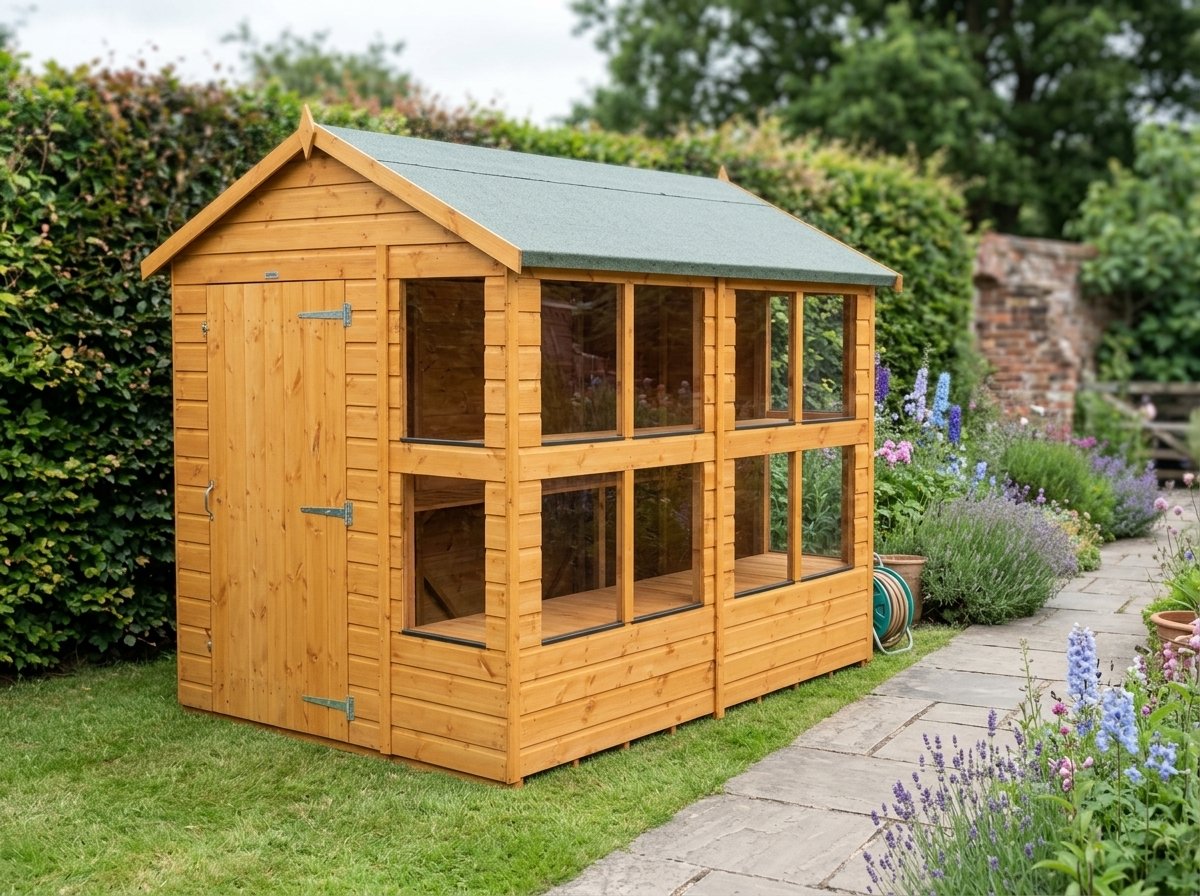
Browse the apex potting sheds →
Grower's note: The size people regret is the one that turned out too small. In years of fitting these sheds, no one has ever said they wished they had bought a narrower one. The pots multiply. The trays stack up. The bagged compost arrives. Buy a foot wider than feels necessary and leave room to turn with a tray in your hands. You will be in there every week of the year.
How do I choose the right potting shed size?
Work in this order: width, then length, then roof shape. Width sets how you move and work inside, so it is the decision that matters most. Length is the cheap way to add bench and storage later in the sum. Roof shape, apex or pent, changes headroom and where the shed can sit. Get the width right and the rest follows.
Start with two honest questions. How many people garden at once, and what has to live inside besides the bench? One grower with hand tools and seed trays needs far less than a household storing a mower, a barrow and a winter's compost. Picture the busiest day of your year, sowing in spring, and size for that. A shed that copes in March copes in every other month.
Our range splits into two families. The Power apex and pent sheds are dip-treated timber with toughened-glass windows and full-length two-tier staging fitted as standard. They cover the everyday 4ft, 6ft and 8ft widths in lengths up to 18ft. The hand-made Swallow Jay and Rook are premium ThermoWood potting shed greenhouses with installation included. Both families measure the same way, so the sizing below holds across the lot.
What width potting shed do I need?
Width decides whether the shed feels generous or cramped, so choose it first. A 4ft shed gives one grower a bench and standing room. A 6ft shed lets two people pass and takes larger trays. An 8ft shed adds floor space for storage beside the staging. Here is the catch most buyers miss: a "4ft" shed is not 4ft inside.
The nominal name and the real width differ. Our Power 4ft apex measures 1214mm (3ft 10in) across. The 6ft is 1814mm (5ft 10in). The 8ft is 2404mm (7ft 9in). The full-length two-tier staging runs 500mm deep on every one, so the working surface grows with the width. On the 4ft you fit two to three standard seed trays across the top tier. On the 6ft you fit four, with room to turn one sideways. That single jump from 4ft to 6ft is the one most people are glad they made.
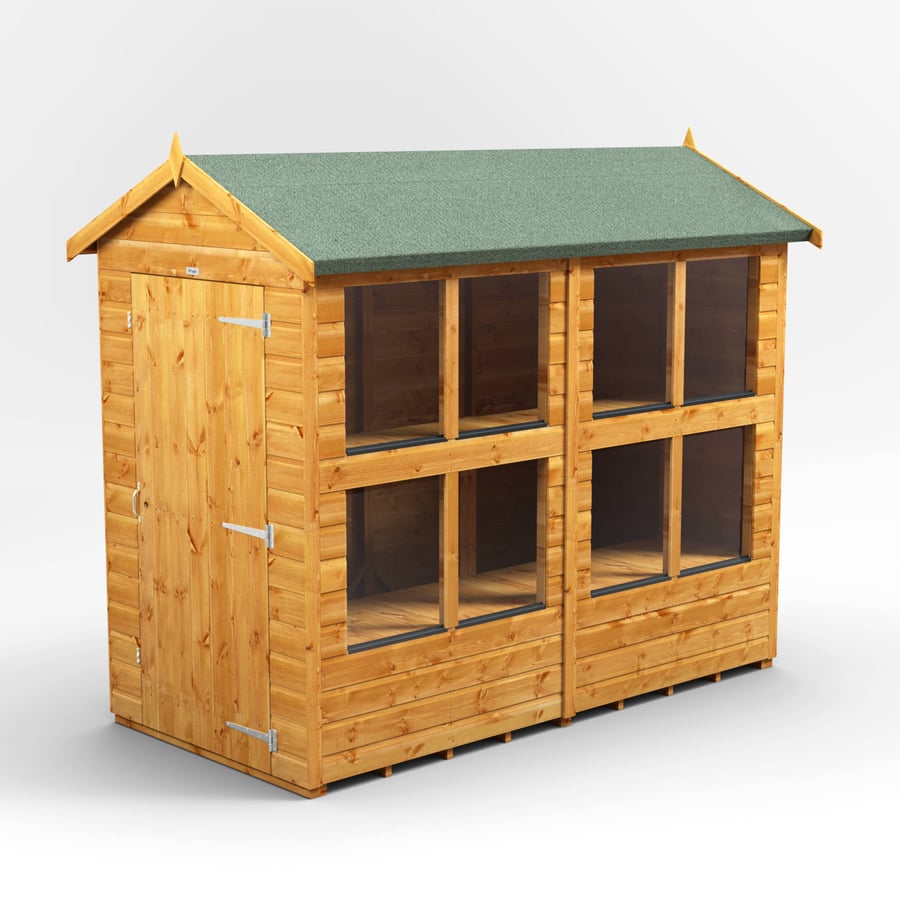
Shop the 4ft Apex Potting Shed →
If you only raise seedlings and keep a few hand tools, 4ft is enough and the cheapest way in, from £914. If you pot on, store compost, and want a second pair of hands at sowing time, step up to 6ft. Go to 8ft only when the shed also has to swallow a mower or a barrow. Width is the dearest measurement to add, so it is the one to get right at the start.
How long should a potting shed be?
Length sets how much bench and storage you get, and it is the cheaper way to add capacity. It steps up in roughly 2ft jumps, from 6ft up to 18ft on the Power range and 20ft on the Swallow sheds. A 6ft length holds a bench and a row of pots for a weekend gardener. An 8ft to 10ft length adds room for bagged compost, a water butt and a tool rack while keeping the bench clear.
A longer shed also gives an unbroken staging run. That is far easier to work along than a short, shuffled bench where everything competes for the same metre. And a 2ft jump in length costs less than a step up in width, while leaving the headroom and door position unchanged. So settle the width your way of working needs, then buy the longest length your plot and budget allow. You rarely regret the extra bench.
For a sense of footprint, a 6ft-wide by 8ft-long apex covers roughly 4.4m of floor. The same width at 10ft long is about 5.5m. An 8ft-wide by 10ft is around 7.3m. Mark the footprint out with canes and string before you order. Stand inside the lines with a tray in your hands. It tells you more than any number.
What can you actually fit inside each potting shed size?
The width sets what your bench and floor will hold, so picture the kit before you buy. A 4ft shed takes a single staging run, a few hand tools on the wall and a stack of seed trays. There is standing room for one. A 6ft shed adds floor space beside the bench for two or three bags of compost, a butt and a watering can. The staging still takes a full tray turned either way.
Step up to 8ft and the shed becomes a working store as well as a growing space. There is room for a wheelbarrow, a mower and bagged compost under the bench, with the staging kept clear for potting. A barrow needs roughly 600mm of clear width to wheel in, so the door and the gangway matter as much as the floor. A 50-litre bag of compost laid flat takes about 800mm by 450mm, which is worth knowing if you buy by the pallet in spring.
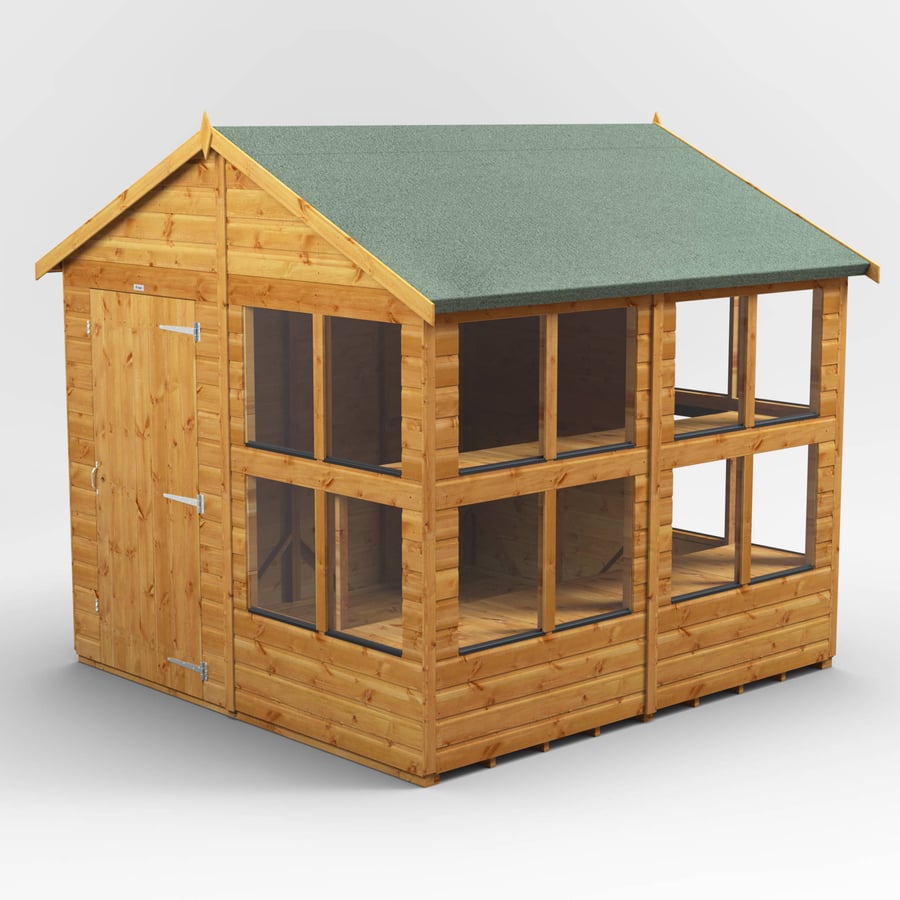
Shop the 8ft Apex Potting Shed →
The Swallow Jay and Rook go further again. Both carry full-length staging 520mm deep at a 745mm working height, with two rear shelves for trays and pots you reach for less often. That fixed bench height is a small thing that matters across a long sowing session. Your back will thank you for a bench at the right level rather than a board balanced on trestles.
Matt's pick
6ft Wide Apex Potting Shed
Best for: most gardens and most gardeners.
Why we rate it: 6ft (5ft 10in) is the width where a potting shed stops being a squeeze. Two people can pass, the 500mm staging takes a full tray either way, and the 2288mm apex roof clears your head at the bench. It still sits well under the 2.5m planning height.
From £1,044
View the 6ft ApexApex, pent or combi: which layout suits your garden?
Roof shape and layout change where a shed can sit and what it can do. An apex roof rises to a central ridge, giving the most headroom at the bench and shedding rain to both sides. A pent roof slopes one way and sits lower, flush against a wall or fence. That suits a tight boundary or a spot under a low eave. Both come in the same widths and lengths, so the choice is about your plot, not your growing.
The third option is the combi. It splits the building into a glazed growing bay and a separate lockable store behind its own door. You choose how the space divides, with a 4ft store as standard and a 6ft store optional. It is the answer when you want one structure to grow in and lock tools away in, rather than a shed and a separate store. If a low boundary is your constraint, compare the pent potting sheds alongside the apex.
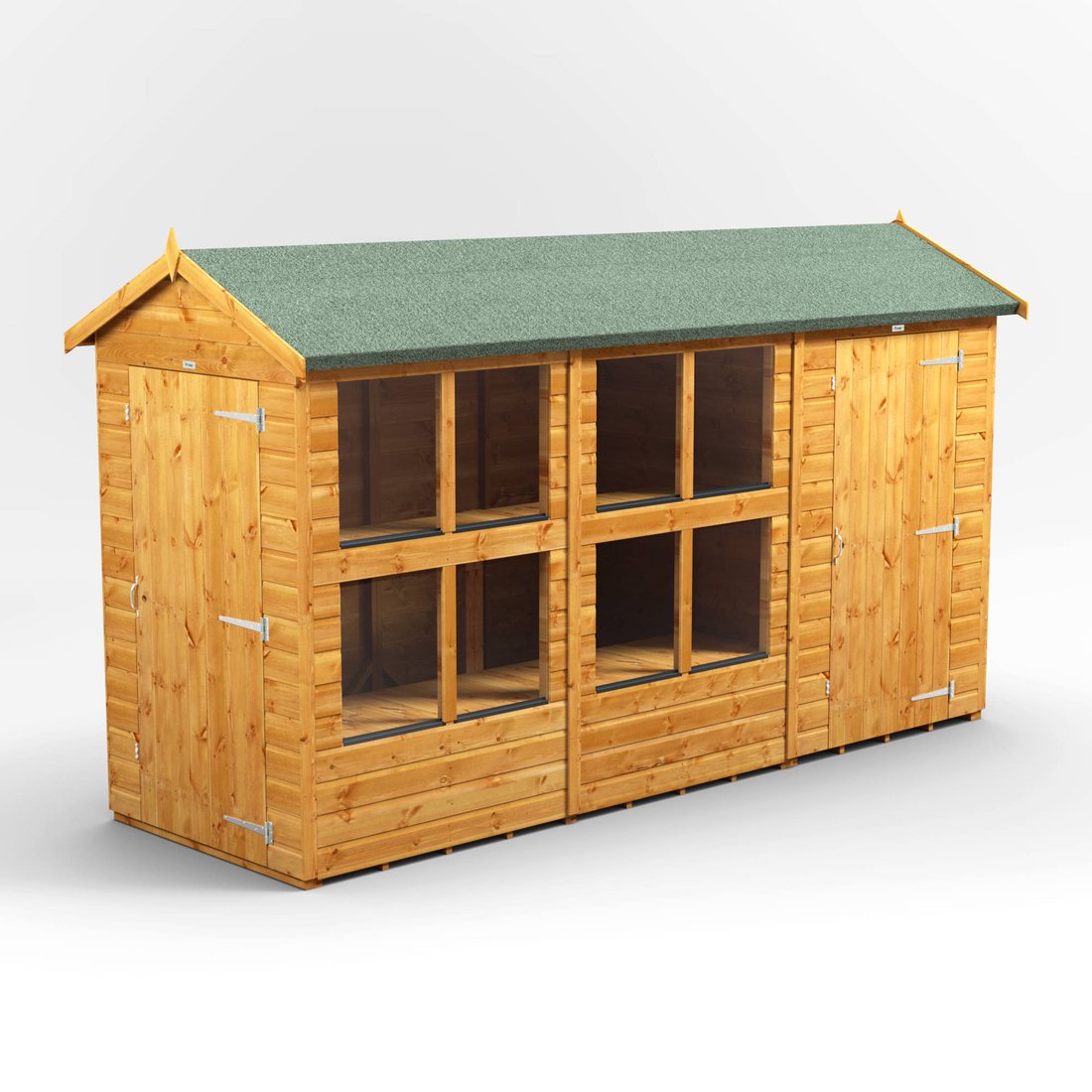
Shop the Apex Combi Potting Shed →
What size potting shed suits two gardeners?
For two people working at once, start at 6ft wide and add length. At 6ft a second person can stand at the far end of the bench while you pot at the near end. Below that, one of you is always backing into the other or into the door. Add length rather than squeezing two into a short shed, and the bench stops being a bottleneck.
The most comfortable two-person choice is the 8ft 9in Swallow Rook. At 2660mm wide it has full-length staging down one side and genuine room at the bench. A storage area is built in, so nobody is tripping over a mower. Its sibling, the 6ft 8in Swallow Jay, suits one keen grower who wants generous bench space and a part-glazed roof for light. Both are ThermoWood, both come with professional installation and delivery included in the price.
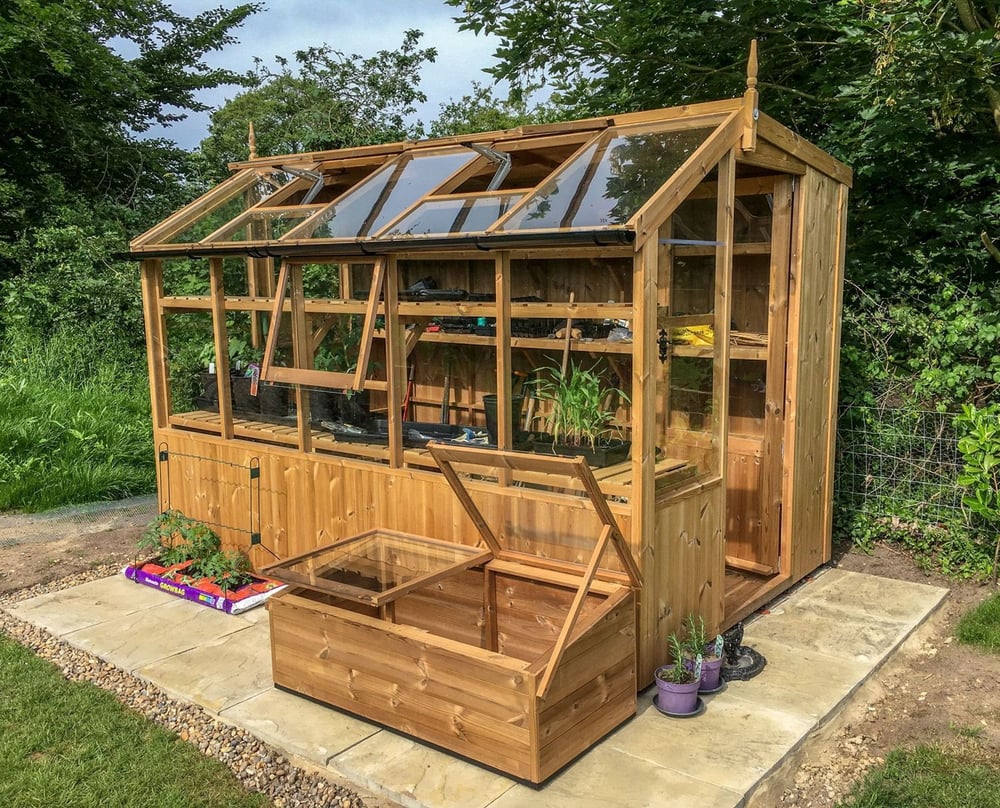
Shop the Swallow Jay Potting Shed →
Should you choose a timber or a glazed Swallow potting shed?
The choice is between a dip-treated timber shed with glazed windows and a fully glazed potting shed greenhouse. The Power range is timber: 12mm shiplap tongue-and-groove on a 44x28mm frame, with toughened-glass windows down the working side and a felt apex or pent roof. It gives you good light at the bench and a solid, secure store, with a 10-year warranty. It is the value route, from £914.
The Swallow Jay and Rook are a step up. ThermoWood is heat-treated timber that resists rot and movement far better than standard softwood. It carries a 12-year warranty. The sides and roof use 3mm toughened glazing, so the whole building works like a greenhouse. Bayliss XL autovents open the roof automatically as the temperature climbs. That matters on a hot day when you are not there to do it. Installation and delivery are included, so the price you see is the price fitted.
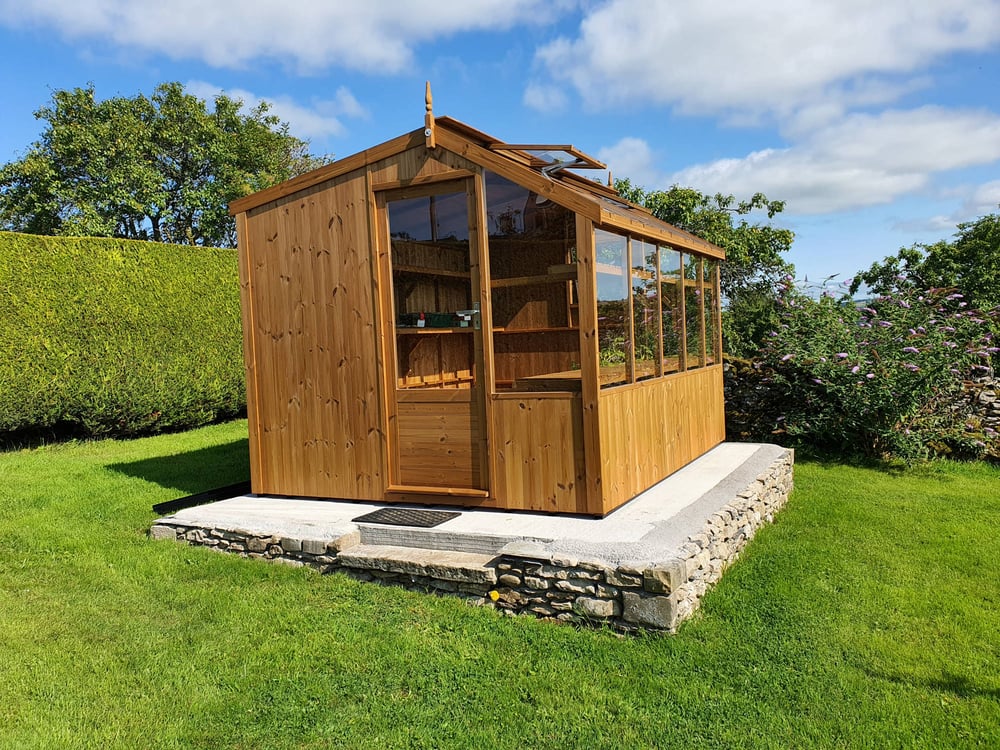
Shop the Swallow Rook Potting Shed →
Watch out: the listed size is the building, not the working space. A "4ft" shed is 3ft 10in across and loses more to the frame and staging. Measure where the door opens and leave room to stand back from the bench. Many gardeners buy to fit a corner, then find they cannot open the door fully or wheel compost in. Plan the room you work in, not just the footprint on the plan.
How much space do you need around a potting shed?
Leave about 600mm to 700mm of clear floor in front of the staging so you can turn with a tray in your hands. Outside, allow a level path at least a barrow's width to the door. Check the door swing before you settle on a spot. A 6ft by 8ft shed needs a base a touch larger than its footprint, on firm, level ground. Plan the access first. A shed that fits the plot but not the path is a daily nuisance.
The base does the quiet work. Paving slabs, a concrete pad or a treated timber frame all suit. Keep the ground level and well drained so the timber stays sound. Leave a hand's width between the shed and any fence so you can treat the boards and clear the gutter. Think about the sun, too. Glazing on the south or west side fills the bench with light for raising seedlings. Set the shed near the house if you carry trays in poor weather. A few metres saved on a wet March morning adds up across a season.
Potting shed sizes at a glance
| Size | Actual width | Who it suits | What fits | From |
|---|---|---|---|---|
| 4ft wide | 1214mm (3ft 10in) | One grower, small garden | Bench, hand tools, seed trays | £914 |
| 6ft wide (our pick) | 1814mm (5ft 10in) | Most gardens, two can pass | Bench, large trays, bagged compost | £1,044 |
| 8ft wide | 2404mm (7ft 9in) | Growing plus real storage | Bench, mower, barrow, compost | £1,304 |
| Combi | From 1214mm | Grow and lock tools away | Glazed bay plus solid store | £1,419 |
| Swallow Jay 6ft 8in | 2035mm (6ft 8in) | One keen grower, premium build | Glazed roof, staging, rear shelves, 10-20ft long | £3,307 |
| Swallow Rook 8ft 9in | 2660mm (8ft 9in) | Two people working at once | Bench plus store, 10-20ft long | £3,485 |
"We stock a tight range on purpose. The Power apex and pent sheds cover the everyday sizes from 4ft to 8ft wide and up to 18ft long. The hand-made Swallow Jay and Rook take you up to a 20ft glazed working shed with installation included. Between them they cover the grower with a corner to spare and the one building a proper potting room. Whatever the size, we would rather you bought a foot too wide than a foot too narrow."
- Matt W, Potting Sheds
Frequently asked questions
What is the smallest useful potting shed?
A 4ft-wide shed is the smallest that still works. In real terms it measures 1214mm (3ft 10in) across. It holds a bench, hand tools and seed trays for one grower, from £914. Go narrower and you lose the room to stand and work.
What size potting shed do two people need?
Start at 6ft wide for two people. At 6ft one can work the far end while the other pots at the near end. The 8ft 9in Swallow Rook is the most comfortable, with room for staging and a second person without crowding the door.
How long should a potting shed be?
Most gardeners are happy at 8ft to 10ft long. That gives an unbroken bench plus room for compost and tools. Length adds capacity more cheaply than width, and lengths run up to 20ft on the Swallow range.
Is a 4ft shed really 4ft wide?
No. The names are nominal, not exact. Our 4ft apex is 1214mm (3ft 10in), the 6ft is 1814mm (5ft 10in) and the 8ft is 2404mm (7ft 9in). Always size from the actual width, not the label.
Do I need planning permission for a potting shed?
Most gardens need no planning consent. Every model stays under the 2.5m permitted-development height limit near a boundary. Check listed buildings and conservation areas with your local planning office before you order.
What is the difference between an apex and a pent potting shed?
Apex has a central ridge, pent slopes one way. Apex gives more headroom at the bench. Pent sits lower and flush to a wall or fence, which suits a tight boundary or a low eave.
Can I make a potting shed bigger later?
It is far cheaper to buy the right size now. Extending a timber shed rarely matches up cleanly. Size up at the start, especially on width, rather than adding on later.
What size base does a potting shed need?
Build a level base a little larger than the shed footprint. Paving slabs, a timber frame or a concrete pad all work. Set it on firm, well-drained ground so the timber stays sound.
Explore the potting shed range
- Power combi potting sheds: a glazed growing bay and a lockable store in one building.
- Swallow Jay potting sheds: premium 6ft 8in ThermoWood, glazed roof, 10ft to 20ft long.
- Swallow Rook potting sheds: the widest at 8ft 9in, built for two, installation included.