Potting Shed Planning Permission: UK Rules
Written by Matt W on 13th Aug 2026.
2m boundary height test
Extra house-distance rule
1m boundary height test
Rear-road rule applies
Many domestic potting sheds are permitted development, but UK rules are not identical. England and Wales restrict overall height to 2.5m within 2m of a boundary. Scotland uses 1m for that height test. Northern Ireland limits eaves near boundaries and adds a rear-road rule. Listed status, restricted rights, siting and total garden coverage can still require permission.
Key takeaways
- Check the rules for your UK nation, not a generic UK summary.
- England and Wales cap overall height at 2.5m within 2m of a boundary.
- Scotland applies its 2.5m boundary test within 1m.
- Northern Ireland uses different boundary wording and a 4m overall limit.
- A Power 6x8 Apex is 2,391mm high, leaving 109mm below 2.5m.
- Planning permission and building regulations are separate approvals.
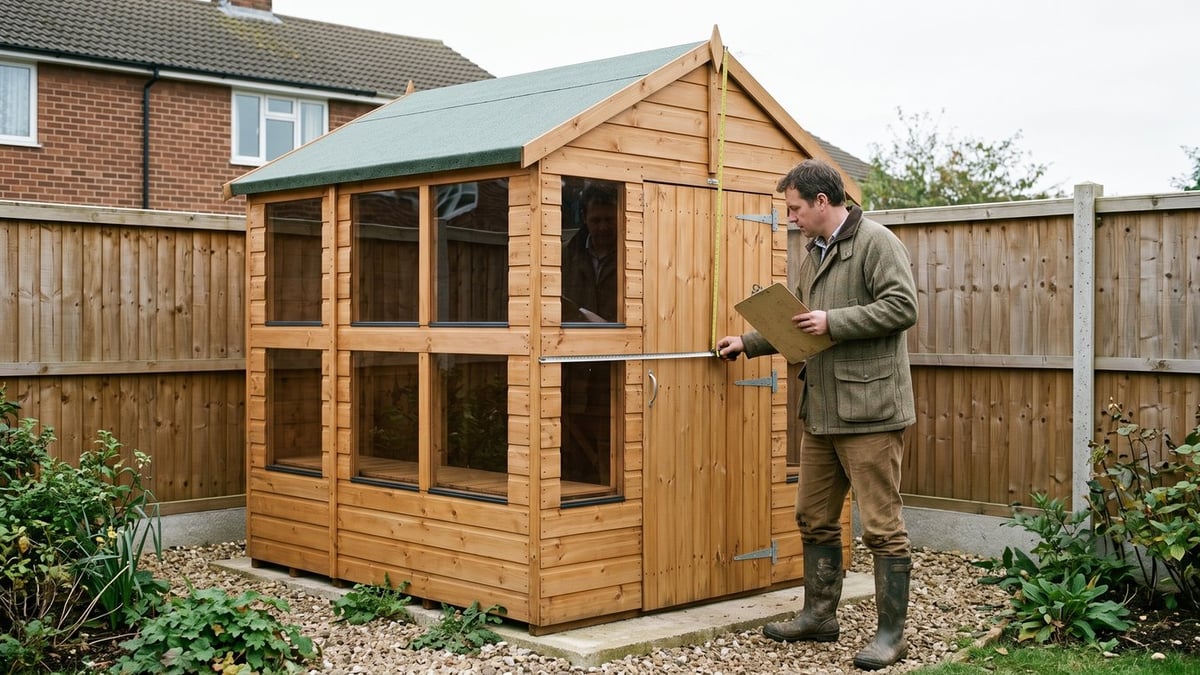
View the apex shed used in this example
Matt's planning note
I check the product drawing against the finished ground level before any base is built. The Power 6x8 Apex is 2,391mm high. That leaves only 109mm below a 2.5m limit. A raised base or sloping plot can use that margin quickly.
Important: This guide explains national rules and is not legal advice. Your planning authority decides how the rules apply to your property.
Do you need planning permission for a potting shed?
Many potting sheds beside houses qualify as permitted development. Every relevant limit must still be met, including position, height, use and garden coverage.
Permitted development means planning permission is already granted by national rules. It does not mean the building is unregulated. Rights can be restricted by property type, earlier approvals or local directions.
A domestic potting shed must remain incidental to the home. Separate living accommodation is outside the normal outbuilding right. Business use can also change the planning position.
Check the correct national section below. Then confirm local restrictions before ordering. Our potting shed positioning guide helps with the physical plot.
How do potting shed planning rules differ across the UK?
| Nation | Boundary height test | General maximum | Coverage test | Distinctive rule |
|---|---|---|---|---|
| England | 2.5m overall within 2m | 4m dual pitch; 3m other | Less than half around original house | No building forward of principal elevation |
| Wales | 2.5m overall within 2m | 4m multi-pitch; 3m single pitch | No more than 50% of curtilage | 1.5m maximum within 2m of house |
| Scotland | 2.5m overall within 1m | 4m overall; 3m eaves | Less than half of rear grounds | Extra listed and conservation footprint limits |
| Northern Ireland | 2.5m eaves within 2m | 4m overall | No more than 50% of curtilage | 3.5m setback from certain rear-road boundaries |
That table is a screening tool, not the complete legal test. Read the official guidance for your nation and ask the local authority when uncertain.
What are the potting shed rules in England?
England usually permits a single-storey domestic potting shed behind the principal elevation. It must meet every Class E limit.
The Planning Portal outbuilding guidance gives a 2.5m maximum eaves height. Overall height can reach 4m with a dual-pitched roof or 3m otherwise.
Any part within 2m of the curtilage boundary brings the complete building under a 2.5m overall limit. Raised platforms over 300mm are excluded.
Existing additions and outbuildings count towards the coverage test. Together, they cannot cover more than half the land around the original house. The original house means its 1948 footprint, or its first-built footprint if later.
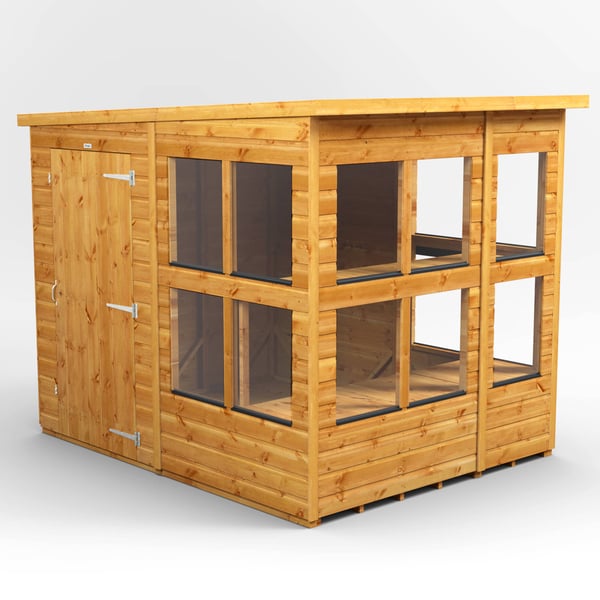
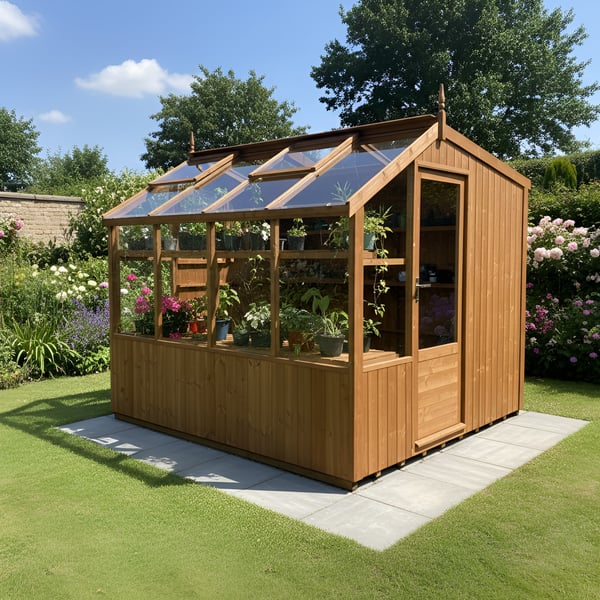
Check the lower pent-roof specification
What are the potting shed rules in Wales?
Wales has familiar height limits but adds siting conditions absent from many summaries. The house itself creates an important extra distance test.
Welsh Government guidance limits any part within 2m of a house to 1.5m high. That can rule out a normal potting shed beside the home.
Within 2m of a property boundary, overall height cannot exceed 2.5m. Eaves cannot exceed 2.5m. Multi-pitched roofs can otherwise reach 4m, and single-pitched roofs can reach 3m.
National Parks, areas of outstanding natural beauty and conservation areas have further restrictions. Outbuildings within a listed building's curtilage need planning permission.
What are the potting shed rules in Scotland?
Scotland normally permits a shed behind the house when all national conditions are met. Its boundary distance differs from England and Wales.
The updated mygov.scot shed guidance limits any part within 1m of the boundary to 2.5m high. The general overall maximum is 4m, while eaves cannot exceed 3m.
The shed and other development must occupy less than half the rear grounds. It cannot become a separate home.
A building in listed grounds has a 4m² footprint limit under permitted development. Conservation areas use an 8m² footprint limit. Listed building consent may also be required.
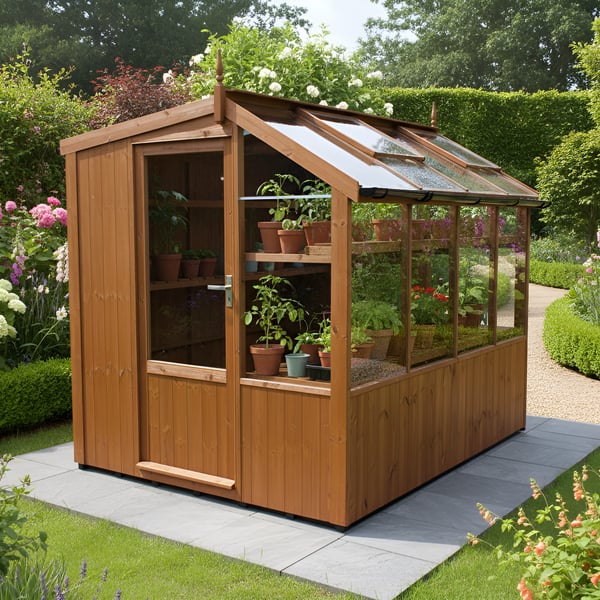
View this fitted ThermoWood shed
What are the potting shed rules in Northern Ireland?
Northern Ireland applies its own 2015 permitted development order. Its boundary test does not mirror England's wording.
Part 1, Class D of the Northern Ireland order sets a 4m overall maximum. Eaves within 2m of the boundary cannot exceed 2.5m.
The building cannot occupy land forward of a qualifying wall facing a road. A further 3.5m setback applies near certain boundaries with a road behind the house.
All buildings and enclosures, excluding the original house, cannot exceed half the curtilage. Domestic living use is excluded. Listed building controls also apply.
Are current potting sheds below the 2.5m height limit?
Several current models sit below 2.5m on their published dimensions. This calculation checks height only and does not prove permitted development.
The Power 6x8 Apex reaches 2,391mm. That leaves 109mm. The Power 6x8 Pent's highest listed side is 2,028mm, leaving 472mm.
The Swallow Jay 6x8 reaches 2,235mm, leaving 265mm. The wider Swallow Rook 8x8 reaches 2,370mm, leaving 130mm.
All clearances use 2,500mm minus the current product height. Site levels, base construction and the authority's measurement method still matter.
| Current model | Published maximum height | Clearance below 2.5m | Height-only verdict |
|---|---|---|---|
| Power 6x8 Apex | 2,391mm | 109mm | Check raised bases carefully |
| Power 6x8 Pent | 2,028mm | 472mm | Largest margin here |
| Swallow Jay 6x8 | 2,235mm | 265mm | Check fitted base level |
| Swallow Rook 8x8 | 2,370mm | 130mm | Check size and site restrictions |
 |
Matt's pick for the greatest height marginBest for: Buyers comparing current models against a 2.5m overall-height test. Why we rate it: Its 2,028mm maximum gives 472mm of height margin on the current drawing. Live price: £973 |
Does a raised base change the planning height?
A raised base can reduce the spare height available on a sloping site. Do not measure only from the shed floor.
England's technical guidance measures height from the highest ground immediately beside the building. Other nations have their own definitions and interpretations.
Record current levels before excavation. Mark the proposed finished slab and add the product's maximum height. Keep photographs and the final product drawing.
The potting shed base guide gives exact base sizes. Never alter a base merely to chase a planning number without professional advice.
Check the wider Rook dimensions
When should you ask the planning authority?
Ask before building when any material fact is unclear. Written confirmation costs less than moving a completed shed.
- The home is listed or sits within listed curtilage.
- The property is a flat, maisonette or converted dwelling.
- A planning condition or direction may have removed rights.
- The site lies within a designated or protected area.
- The shed would sit forward of the relevant elevation.
- The building may support business or residential use.
- Ground levels or boundary positions are disputed.
In England, a lawful development certificate can formally confirm a proposal's lawfulness. Other nations have their own processes. Use the authority's current route.
Are building regulations the same as planning permission?
Building regulations and planning permission are separate systems. Passing one test does not provide the other approval.
Small detached outbuildings without sleeping accommodation are often exempt from building regulations. Floor area, boundary distance, materials and use can change that answer.
Electrical work also has safety requirements. Use a competent electrician for a new outdoor supply. Water, drainage or heating can create further checks.
Compare your chosen model in the potting shed design guide. Confirm its use before planning services.
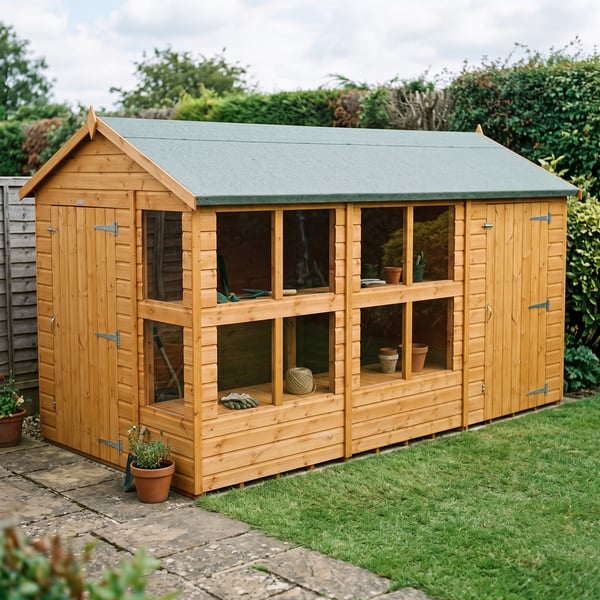
View this longer growing and storage model
Potting sheds with verified dimensions
Why we publish exact dimensions: Rounded product names cannot answer planning questions. We use the current millimetre drawings so buyers can compare the real building with their local rules. - Matt W, Potting Sheds
Frequently asked questions
Do most potting sheds need planning permission?
Many domestic potting sheds qualify as permitted development. Every national and property-specific condition must still be satisfied.
How high can a potting shed be near a boundary?
The answer depends on the UK nation. England and Wales use 2.5m overall within 2m, while Scotland uses 1m.
Can a potting shed go in a front garden?
Front positioning often falls outside normal permitted development. The exact test uses the relevant elevation and road relationship.
Does a wooden base count towards shed height?
Finished levels can affect the measured development height. Check national measurement rules before building a raised base.
Do listed homes have potting shed permitted development rights?
Listed status brings tighter controls across the UK. Contact the planning authority and conservation team before ordering.
Can I use a potting shed as sleeping accommodation?
Normal domestic outbuilding rights do not cover a separate home. Sleeping use can also trigger building-control and safety requirements.
Do I need building regulations for a potting shed?
Many small detached sheds are exempt, but exceptions apply. Check floor area, materials, boundary distance, services and intended use.