Where Should a Potting Shed Go?
Written by Matt W on 13th Aug 2026.
09:00, 12:00 and 15:00
750mm door aperture
Allow 600mm where possible
Level and freely drained
A potting shed should stand on level, well-drained ground with useful daylight across its glazed working side. Keep the door route clear and leave maintenance access where space permits. Check the proposed plot at 09:00, 12:00 and 15:00. A Power 6x8 Pent needs a 2,380 x 1,878mm base, before paths or service gaps are added.
Key takeaways
- Choose useful daylight over the brightest-looking corner at one moment.
- Check shade at 09:00, 12:00 and 15:00 before you mark the base.
- Keep a 750mm doorway and its outward swing clear.
- Allow about 600mm for cleaning and timber care where the plot permits.
- Place pent-roof drainage away from fences and neighbouring plots.
- Measure the delivery route before paying for the base.
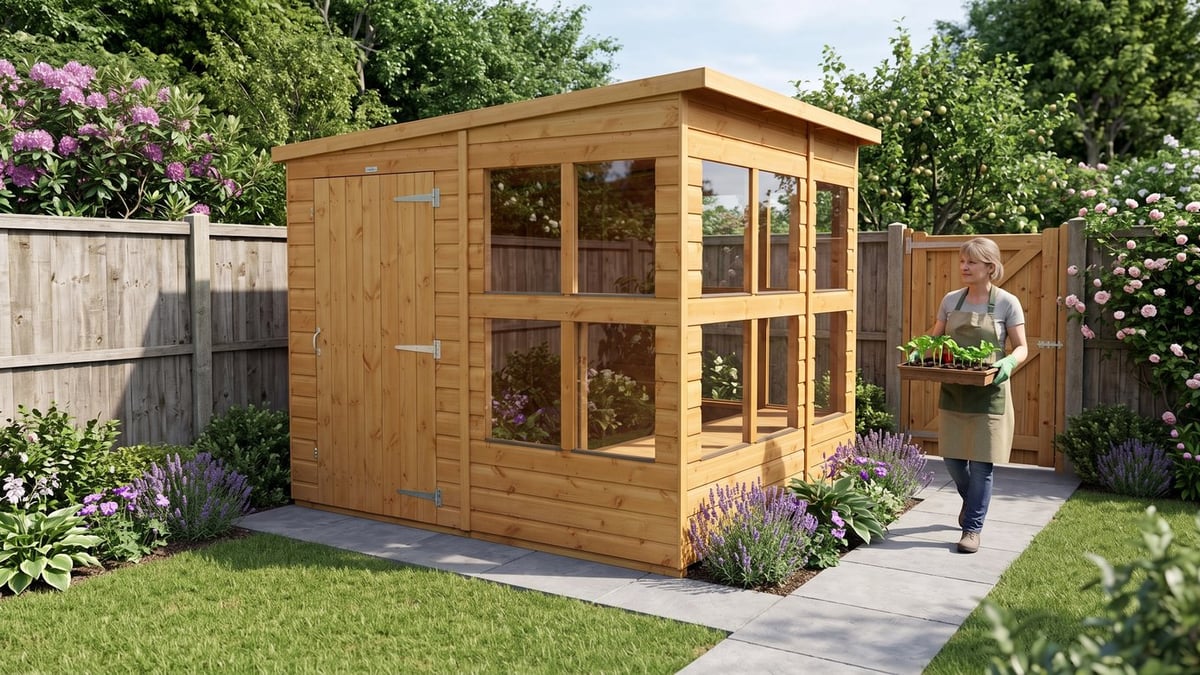
View the pent shed used in this layout
Matt's siting note
I set the exact base with four canes, then carry a seed tray through the planned doorway. That quick walk exposes tight turns and poor door positions. I also photograph the plot three times during one clear day. A corner that looks bright at lunch can be shaded all morning.
What is the best position for a potting shed?
The best position receives several hours of daylight and stays accessible in wet weather. It should also avoid standing water, falling branches and awkward delivery turns.
Start with the workbench, because seedlings receive light through the glazed side. A sunny wall behind the solid side can provide shelter. Dense evergreen shade across the windows causes a bigger problem.
The RHS microclimate guide says south-facing areas receive the most light. North-facing areas receive the least. Local trees, fences and buildings can change that simple rule.
Do not choose from aspect alone. Check drainage after rain, then walk the route with a tray or wheelbarrow. Our potting shed buying guide covers the other decisions.
Which direction should potting shed windows face?
Face the main glazing towards the most useful open light on your plot. South and west usually feel warmest. East can give gentle morning light for early jobs.
A south-facing glazed side may overheat during clear summer afternoons. Opening windows, roof vents and external shade then matter. A west-facing side catches later sun when daytime temperatures already peak.
North-facing glazing gives steady but weaker light. It may suit shade-tolerant work, yet seedlings can lean towards brighter windows. Avoid placing glazing directly against a solid fence.
RHS greenhouse advice recommends uninterrupted sun where possible. It also notes east-west orientation can improve winter light. Apply that principle to the glazed working side.
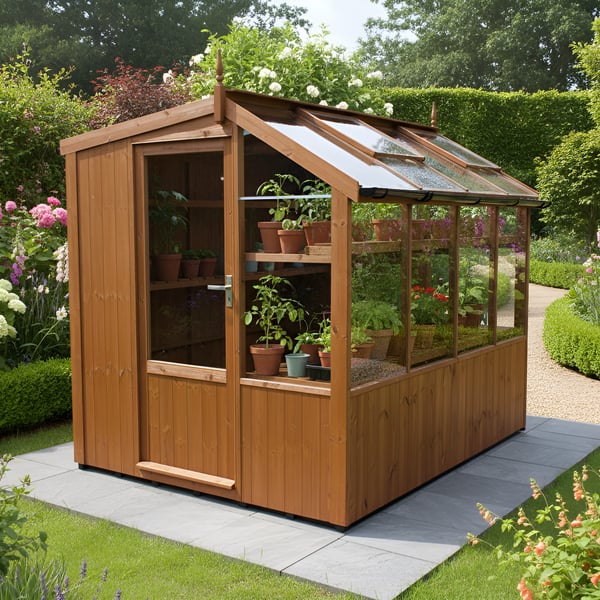
See this fitted glazed potting shed
How much space should you leave around a potting shed?
Leave about 600mm on service sides where the garden allows it. This gives room to clean glass, apply timber treatment and clear leaves.
The exact base remains the starting rectangle. The Power 6x8 Pent requires 2,380 x 1,878mm. A 600mm strip around every side creates a 3,580 x 3,078mm working plot.
The Swallow Jay 6x8 needs a 2,035 x 2,550mm fully slabbed or concrete base. The same full service strip creates a 3,235 x 3,750mm working plot. These are our calculations from current product drawings.
Tight gardens may not provide 600mm everywhere. Prioritise the glazing, door, roof-drainage side and timber needing future treatment. Never sacrifice the required base dimensions.
| Current example | Exact base | With 600mm all round | Positioning priority |
|---|---|---|---|
| Power 6x8 Pent | 2,380 x 1,878mm | 3,580 x 3,078mm | Glazed side and roof fall |
| Power 6x8 Apex | 2,380 x 1,878mm | 3,580 x 3,078mm | Both roof-drainage sides |
| Swallow Jay 6x8 | 2,035 x 2,550mm | 3,235 x 3,750mm | Roof vents and installer access |
| Swallow Rook 8x8 | 2,660 x 2,550mm | 3,860 x 3,750mm | Wider gable and both doors |
 |
Matt's pick for controlled roof drainageBest for: A wall-side plot where one roof fall simplifies rainwater planning. Why we rate it: The 2,028mm high side leaves a lower profile than the matching apex. Live price: £973 |
Where should the potting shed door face?
The door should face the simplest safe route from the house or garden gate. A direct path saves repeated turning with trays, compost and tools.
The current Power 6x8 models list a 750 x 1,630mm door aperture. Their modular design lets the door panel sit at either end during construction. Decide before assembly.
Mark the open door on the ground with a cane or timber offcut. Include handles, nearby fences and raised beds. A base can fit perfectly while the door hits a post.
Swallow models arrive as large sections for installation. The Jay also needs at least 2,032mm access height. Panels cannot travel through a house or around right-angled turns.
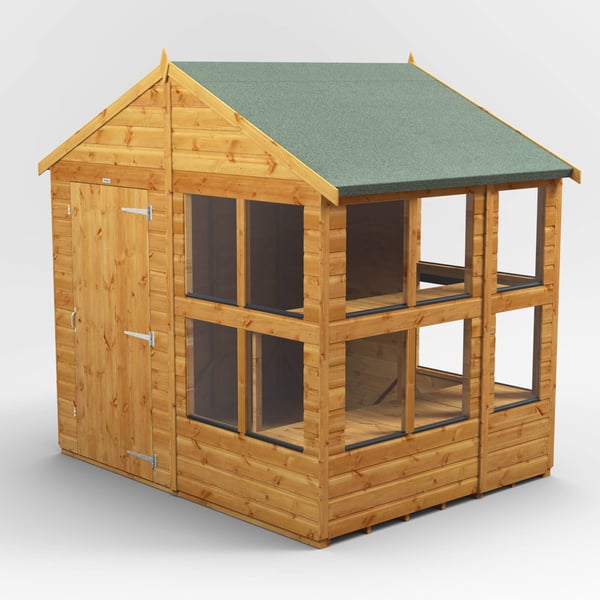
Check this flexible door layout
Can a potting shed go next to a fence or boundary?
A potting shed can often sit near a boundary, but height rules and maintenance access still apply. The exact planning test depends on the UK nation.
In England and Wales, a building within 2m of a boundary faces a 2.5m overall height limit. Scotland uses a 1m boundary distance for its 2.5m limit. Northern Ireland applies different wording.
Read our UK potting shed planning guide before fixing the base. Check the local authority when rights are unclear.
A planning-compliant gap can still be unusable. Wet leaves collect behind timber, while glass becomes difficult to clean. Leave enough room for the real maintenance method.
Boundary warning: Do not treat a 2m planning threshold as a recommended service gap. They answer different questions.
Is an apex or pent shed easier to position?
A pent shed is easier where rainwater must fall in one chosen direction. Its lower profile can also suit restricted garden edges.
Confirm the high side before ordering or building. The current Power 6x8 Pent lists sides at 1,913mm and 2,028mm. Direct runoff towards your own drainage area.
An apex roof sheds water to both long sides. It works well in an open plot with maintenance room. The matching Power Apex reaches 2,391mm at the ridge.
A combi adds a second door and a longer footprint. Plan both approaches before laying the base. Compare the options in our apex, pent and combi guide.
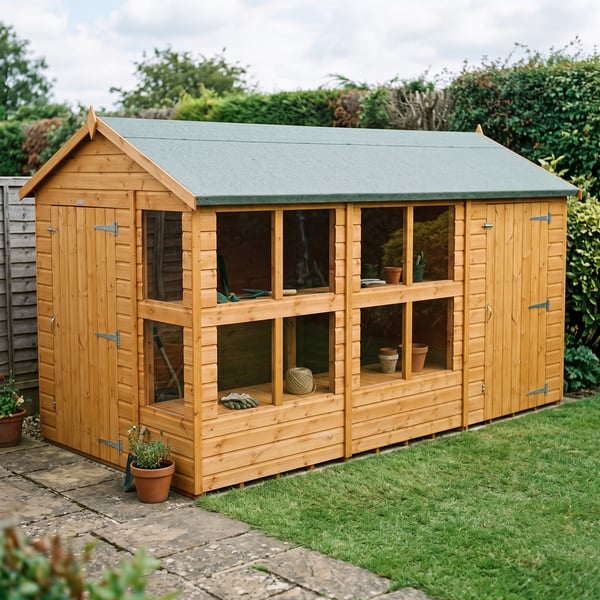
View this two-door combi layout
Which garden positions should you avoid?
Avoid hollows, unstable ground and permanent shade from buildings or evergreen trees. Also avoid routes that require sharp turns with large panels.
Tree roots can move bases and falling branches can damage roofs. Deciduous trees cast different shade after leaf growth, so check beyond winter conditions.
The UK commonly receives winds from west or south-west. The Met Office notes strong local differences near coasts and hills. Use shelter without blocking all ventilation.
Keep the building away from surface-water channels. Our base guide explains drainage and finished-level choices.
Three practical potting shed plot plans
| Plot | Place the glazing | Place the door | Roof choice | Main check |
|---|---|---|---|---|
| Open rear lawn | Towards open southern light | Towards the house path | Apex | Wind exposure |
| Long side return | Towards the open garden | At the clearest end | Pent | Roof fall and gate width |
| Growing plus storage corner | Away from dense shade | Both doors onto hardstanding | Combi | Two clear approaches |
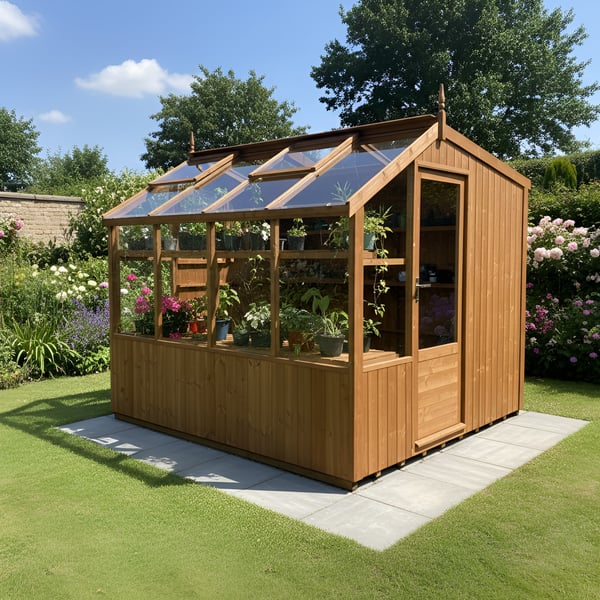
Potting sheds for different plots
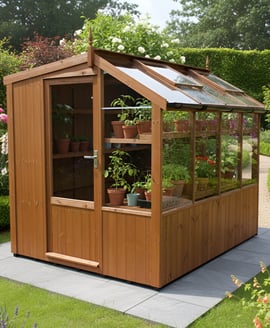
Why we offer several layouts: Garden position should choose the roof and door arrangement. The Power range gives flexible door assembly. Swallow covers larger fitted buildings where access and base preparation are settled first. - Matt W, Potting Sheds
Frequently asked questions
Should a potting shed face south?
South-facing glazing usually receives the most daylight. Check summer heat, local shade and ventilation before deciding.
Can a potting shed go in a shaded garden?
Yes, but permanent deep shade limits useful growing light. Choose the brightest open aspect and consider suitable artificial lighting.
How close can a potting shed be to a fence?
Planning limits differ across the four UK nations. Also leave practical room for drainage, glass cleaning and timber treatment.
How much room should I leave around a potting shed?
Allow about 600mm on service sides where possible. Prioritise glazing, doors, gutters and timber requiring future care.
Should a potting shed be near the house?
A shorter route makes frequent carrying easier. Do not trade away daylight, drainage or delivery access merely for convenience.
Can I put a potting shed under a tree?
Avoid placing it directly beneath large branches. Roots, falling debris and changing shade can create long-term problems.